How to Run a Pet Show or Pet Pageant: The Fun Guide to Furry (and Scaly) Competitions
Table of Contents
- The Magic of Pet Shows: Why They're More Than Just Cute Contests
- What This Guide Covers
- Planning Your Pet Show: The Foundation for Success
- Types of Pet Show Formats
- Scoring Categories and Judging Criteria
- Rules and Requirements
- Event Setup: Creating the Perfect Environment
- Day-of Timeline and Schedule
- Judging Approaches
- Photo Documentation and Digital Scoring
- The Moment of Truth: Revealing Winners
- Safety and Liability Considerations
- Common Mistakes and How to Avoid Them
- Turning Your Pet Show Into a Fundraiser
- Related Articles and Resources
- Why RevealTheWinner.com is Perfect for Pet Shows
- Final Thoughts
The Magic of Pet Shows: Why They're More Than Just Cute Contests
There's something undeniably magical about watching a dog strut across a stage wearing a sparkly costume, or a cat tolerating a tiara for exactly fifteen seconds while the crowd goes wild. Pet shows have captured hearts and built communities for generations. But what makes a truly memorable pet show? It's not just about the animals—it's about creating an experience where pet parents feel celebrated, spectators get moments of pure joy, and your community comes together over a shared love of our furry, feathered, and scaly friends.
Whether you're organizing a fundraiser for your local animal shelter, planning a neighborhood summer event, or hosting a corporate team-building activity, a well-run pet show can become an unforgettable tradition. The good news? With the right planning and a modern judging platform, organizing a professional-quality pet competition is easier than ever.
What This Guide Covers
In this comprehensive guide, we'll walk you through every step of running a successful pet show—from the initial planning phase through the dramatic moment when winners are announced. We'll cover how to choose the right venue and pet show format, establish clear judging criteria, manage logistics on the day of the event, and use technology to streamline scoring and capture memories. You'll learn from common mistakes that can derail even the best-intentioned events, and discover how to create those magical moments that keep attendees talking about your event for years to come.
Planning Your Pet Show: The Foundation for Success
Why Pet Shows Work as Community Events
Pet shows are remarkably versatile. Fundraising opportunities make them perfect for animal shelters, rescue organizations, and veterinary clinics looking to raise money while building goodwill. Family-friendly fun draws in crowds of all ages—even people without pets enjoy the entertainment and community spirit. Neighborhood building transforms a one-time event into something that strengthens local connections and creates lasting memories. Corporate team building has become increasingly popular, giving employees a chance to relax and celebrate their colleagues' personalities through their pet choices.
Choosing Your Venue
Your venue sets the tone for the entire experience. Outdoor parks work beautifully for larger shows and offer natural spacing that keeps animals calm. Look for areas with shade trees, water access, and parking facilities. Community centers provide weather protection and are ideal for smaller, more intimate events. School grounds during off-hours can accommodate sizable competitions with built-in facilities. Fairgrounds are perfect if you're planning an all-day extravaganza with multiple rings or simultaneous competitions.
When evaluating venues, consider these practical factors:
- Space for registration and check-in
- Covered areas for judges and spectators
- Safe holding areas away from the main competition space
- Easy bathroom and parking access
- Power outlets if you're using digital scoring
- Pet-friendly amenities like water stations
Safety Considerations and Pet-Friendly Logistics
The comfort and safety of your animal contestants must be your top priority. Vaccination requirements should be clearly stated in your entry information—ask for proof of current rabies vaccination and generally good health. Temperature management is crucial; never schedule outdoor events during extreme heat, and always have water stations distributed throughout the venue. Separate holding areas keep stressed animals calm and away from unfamiliar pets they might clash with. Handler supervision means requiring that all pets remain on leashes or in appropriate carriers when not actively competing.
Create a detailed safety briefing for all handlers covering leash etiquette, appropriate pet handling, and your zero-tolerance policy for aggressive behavior. Brief your judges on recognizing signs of stress in animals and have a veterinarian or experienced animal handler on-site in case of emergencies.
Types of Pet Show Formats
You don't have to stick with traditional breed judging—the most successful pet shows embrace variety and creativity.
Judged Competitions with professional or expert judges following established criteria work well when you want formal scoring and clear winners. This is the classic pet show format where judges evaluate animals based on appearance, behavior, and other predetermined factors.
Costume Contests are wildly popular and require zero breeding knowledge—the animal wearing the most creative, well-constructed, or hilarious outfit wins. This levels the playing field and lets creativity shine.
Talent Shows celebrate what pets can do rather than how they look. Tricks, agility demonstrations, singing (yes, really), and other performances make for entertaining competitions.
Photo Contests eliminate handling stress entirely. Owners submit their best pet photos, spectators or judges vote, and a winner is crowned. This works exceptionally well for pet shows with very large entries.
"Best Trick" Categories within a larger competition provide an accessible option for shy animals or less experienced pet parents. Simple tricks count just as much as complex ones.
The best events often combine multiple formats—running a judged category alongside a costume contest, for instance—to give everyone a chance to participate in the way that suits them best.
Scoring Categories and Judging Criteria
Standard Scoring Table
| Category | Weight | What Judges Consider |
|---|---|---|
| Appearance & Grooming | 25% | Coat/fur condition, cleanliness, neatness, overall health and vitality |
| Personality & Behavior | 25% | Temperament, confidence, responsiveness to handler, composure |
| Costume/Presentation | 25% | Creativity, fit and comfort, visual impact, how well it suits the animal |
| Crowd Appeal | 25% | Audience engagement, entertainment value, memorable moments, connection with spectators |
Tailoring Categories to Your Event
If you're hosting a costume-focused event, you might adjust the weights to give Costume/Presentation 40-50% of the score. For a talent show, Personality & Behavior should dominate. For a casual neighborhood gathering, Crowd Appeal might be weighted even more heavily. The key is transparency—publish your scoring rubric before the event so handlers know what judges are evaluating.
Consider creating special category awards that celebrate different types of achievements: Best Groomed, Most Creative Costume, Best Trick, Cutest Expression, Best Owner-Pet Look-Alike, Most Unusual Pet, Best Rescue Story, and Friendliest Personality. These additional awards mean more winners and more people leaving with positive memories.
Rules and Requirements
Clear rules prevent confusion and ensure a smooth event. Here's what every pet show needs:
Vaccination and Health Requirements
- Current rabies vaccination (required for most jurisdictions)
- General good health; visibly sick animals should be turned away
- Recent parasite treatments if applicable to your region
Leash and Containment Rules
- All dogs must be on leash when not actively in the competition ring
- Small animals must be in approved carriers
- Handlers are responsible for their animals at all times
Handler Requirements
- Handlers must be at least [18 or your specified age]
- Handlers are responsible for pet behavior and any damage or incidents
- Reasonable accommodations for children to participate with adult supervision
Breed and Species Inclusivity
- Accept all dog breeds and mixes (never exclude based on breed)
- Welcome cats, rabbits, birds, reptiles, pocket pets, and other animals
- Create separate categories or divisions if necessary to ensure fair competition
Behavior Standards
- Implement zero tolerance for aggressive animals
- Reserve the right to remove any handler or pet whose behavior is dangerous
- Clearly define what constitutes disqualifying behavior
Event Setup: Creating the Perfect Environment
Registration and Check-In
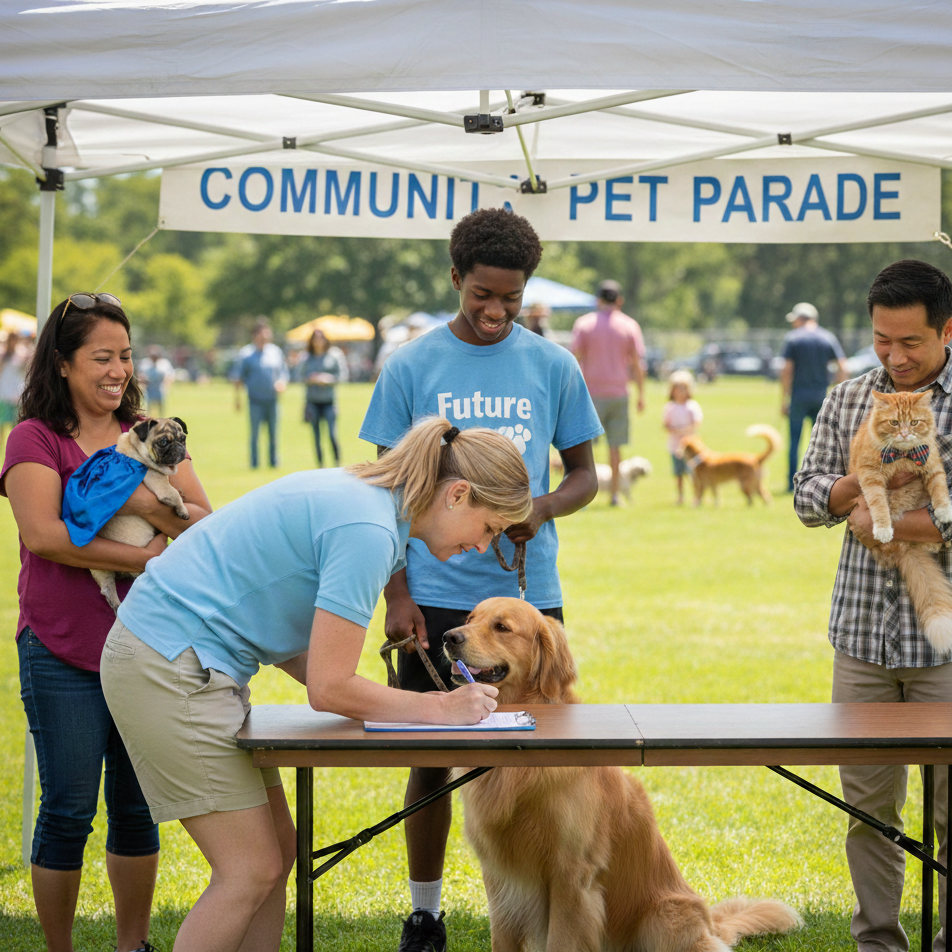
Set up a dedicated registration area near the entrance with:
- Clear signage and directional markers
- Volunteers with clipboards and check-in lists
- Space for handlers to complete paperwork
- Visible display of rules and categories
- A safe area for handlers waiting with their pets
Process registrations in advance online if possible to speed up day-of check-in. Have backup paper forms available. Assign each entry a number or color-coded bib for easy identification during competition.
Competition Space Setup
The Parade Route or Stage should be clearly marked and large enough for judges to see all angles of each competitor. If using a stage, ensure it has safe, non-slip surfaces and appropriate lighting. For outdoor shows using a parade route, establish a clear path and ensure good sightlines for spectators.
Holding Areas should provide:
- Separate, quiet spaces for animals waiting their turn
- Shade and ventilation
- Water bowls (provide or ask handlers to bring)
- Waste cleanup supplies readily available
- Volunteer supervision to keep things calm
Spectator Areas should offer:
- Comfortable viewing locations with good sightlines
- Shade in outdoor venues
- Clear signage indicating which categories are competing next
- Seating for elderly attendees or those with mobility challenges
Essential Amenities
Set up multiple water stations with bowls and fresh water—for both pets and people. Provide abundant waste cleanup stations with bags, trash cans, and a designated relief area. Have first aid supplies on hand for minor human injuries, and consult with a veterinarian about pet emergency protocols.
Day-of Timeline and Schedule
| Time | Task | Responsible Party |
|---|---|---|
| 7:30 AM | Arrive and set up registration, holding areas, judging station | Setup crew |
| 8:00 AM | Final equipment check, judge briefing, volunteer assignments | Event coordinator |
| 8:30 AM | Doors open, early registration | Registration volunteers |
| 9:00 AM | Registration deadline, final competitor count announced | Registration |
| 9:15 AM | Opening remarks and event overview for spectators | MC/coordinator |
| 9:30 AM | First competition category begins (e.g., Dogs - Any Breed) | Judges and handlers |
| 10:00 AM | Continue competitions with 10-15 min breaks between categories | Judges |
| 11:00 AM | Refreshment break, spectators browse vendor area or photo opportunities | Everyone |
| 11:15 AM | Afternoon competition categories | Judges |
| 12:30 PM | Lunch break (30-45 minutes) | Everyone |
| 1:15 PM | Final competition categories and special awards | Judges |
| 2:30 PM | Deliberation and final scoring, handlers return to seats | Judges and MC |
| 2:45 PM | Closing remarks before awards | MC |
| 3:00 PM | Award ceremony and grand finale | MC and judges |
| 3:45 PM | Photo opportunities with winners, event wrap-up begins | Everyone |
| 4:00 PM | Official end time, cleanup begins | Volunteers |
Keep your total event to 4-5 hours maximum. Longer events lead to restless animals and tired spectators. If you have many entries, consider running a morning and afternoon session or spanning two days.
Judging Approaches
Professional Panel Judges
Recruit experienced judges from your local veterinary community, dog show associations, animal welfare organizations, or respected pet professionals. Brief them thoroughly on your scoring rubric before the event. This approach lends credibility and ensures consistent, fair judging.
Audience Voting
Let spectators vote for their favorites using ballots, a mobile app, or digital kiosks. This creates energy, engages the crowd, and often produces delightful results. Audience voting can be the sole judging method or combined with professional judges for multiple award categories.
Hybrid Approach
Combine professional judges (40% of final score) with audience voting (60% of final score). This gives expert perspective while keeping the event fun and participatory. Some events run separate categories—judges pick Best Groomed while the audience picks Fan Favorite.
Whichever approach you choose, be transparent about the scoring method and ensure judges understand exactly how their scores influence the outcome.
Photo Documentation and Digital Scoring
Pet shows generate incredible photo opportunities, and modern judging platforms can streamline the entire process.
Capturing the Moments
Assign a dedicated photographer or volunteer with a decent camera to capture each competitor's best moments during their judging. These photos become treasured memories and great marketing for future events. Have handlers bring phones for candid photos, and create a photo zone where families can capture their own memories.
RevealTheWinner.com Integration takes your pet show to the next level. Upload photos directly to the platform, where judges can review high-quality images while making their decisions. The photo upload feature is particularly valuable when:
- You want judges to have consistent reference images for comparison
- You're running a photo contest component
- You want to share results and photos with participants after the event
- You're creating a digital record of your competition
The digital interface allows judges to score in real-time from phones or tablets, eliminating complicated scorecards and reducing mathematical errors. Photos display clearly on judge devices, making the evaluation process transparent and fair.
Creating a Shareable Record
Compile your official competition photos into a gallery that you can share with participants via email or social media. This extends the joy of the event and provides free marketing for next year's show. With RevealTheWinner's photo features, you can even embed results directly in your announcement.
The Moment of Truth: Revealing Winners
The award ceremony is your chance to create those magical moments that attendees will remember for years.
Building Anticipation
Have your MC read category descriptions before announcing each winner, reminding the audience why this category matters. Build dramatic pauses—let the tension build. Play music as you announce finalists before revealing the champion.
Honoring All Competitors
Present special recognition awards liberally: Cutest Expression, Best Behaved, Most Enthusiastic, Best Costume Detail, and so on. When everyone wins something, everyone leaves happy. Use your digital platform to display all competitors' photos during the ceremony—everyone deserves recognition.
The Grand Finale
Save your Grand Champion or Overall Winner for last. This is the moment for confetti, music, dramatic lighting if available, and genuine celebration. Get a great photo with the winner, handler, and judges together. This is the image that will dominate your marketing for next year's event.
Safety and Liability Considerations
Risk Management
Require liability waivers from all handlers, acknowledging that pets can be unpredictable and owners accept responsibility for any incidents. Consult with an attorney about language appropriate to your jurisdiction.
Have general liability insurance for your event that covers spectator injuries. Ask your venue about their insurance requirements and what they cover.
Establish clear safety protocols including procedures for handling aggressive animals, medical emergencies, and lost pets. Brief all volunteers on these protocols.
Vendor and Sponsor Vetting
If you're bringing in vendors or accepting sponsorships, ensure they're aligned with your values. Vet pet product companies, grooming services, and local businesses carefully. Exclude any vendors making questionable health or safety claims.
Weather Contingency Plans
For outdoor events, have a rain date or indoor backup planned and communicated clearly. Know the warning signs for heat stress in animals and be ready to relocate indoors or postpone if conditions are unsafe.
Common Mistakes and How to Avoid Them
Insufficient Cleanup Stations: Expect accidents and plan for them. Distribute waste stations throughout the venue, not just at the exits. You'll need far more bags and supplies than you think. Assign a volunteer specifically to keep areas clean throughout the day.
Ignoring Signs of Aggressive Behavior: Don't give animals a "second chance" if they're showing aggression. Remove them from the event immediately to protect other animals and people. It's difficult but necessary.
Running the Event Too Long: Bored animals and tired spectators lead to problems. A well-paced 3-4 hour event beats a 6-hour marathon every time. Cut categories or split into multiple days if you have many entries.
Forgetting Water and Breaks: Animals overheat quickly, especially in sun. Provide water stations, enforce break times, and never schedule back-to-back judging without rest periods. Have volunteers specifically watching for stressed or overheated animals.
Poor Signage and Wayfinding: Confused handlers and spectators create stress. Mark everything clearly: registration area, holding areas, spectator seating, restrooms, water, parking. Use large, readable signs and directional arrows.
Inadequate Volunteer Training: Well-meaning volunteers without clear instructions become problems rather than solutions. Conduct a pre-event briefing covering safety, schedules, and what to do in emergencies. Provide written quick-reference guides.
Not Communicating Rules in Advance: Send all competitors the rules, categories, scoring criteria, and schedule at least one week before the event. Answer questions promptly. A well-informed competitor base leads to far fewer problems on the day.
Neglecting Accessibility: Remember that some spectators and handlers have mobility challenges. Ensure level ground, accessible parking, shaded seating, and adequate restroom facilities. Have volunteer assistance available.
Turning Your Pet Show Into a Fundraiser
Pet shows are excellent vehicles for fundraising—people are in a great mood and already supporting animals.
Revenue Streams
Entry fees are your primary income source. Price them reasonably ($15-30 per entry depending on your area) to encourage participation while covering costs. Offer discounts for multiple entries or early registration.
Sponsorships from local pet businesses, veterinary clinics, and pet supply stores offset costs. Create sponsor levels (Platinum, Gold, Silver) with corresponding visibility and benefits. Feature sponsors prominently on signage and in the program.
Concessions selling food, drinks, pet treats, and pet accessories generate additional revenue. Partner with local bakers or caterers, or keep it simple with a drink and snack stand. Pet treat sales are especially popular.
Vendor booths where local pet businesses pay to display products and services add revenue with minimal effort on your part. Vet clinics, groomers, trainers, pet photographers, and pet product businesses are all interested.
Donations and raffles during the award ceremony can raise significant funds. Offer donated pet products or experiences (free grooming, training sessions, etc.) as raffle prizes.
Transparency and Planning
Be transparent about how funds will be used, especially if you're fundraising for a specific cause. Create a simple budget showing estimated expenses and projected revenue. After the event, share results with supporters and explain how funds were allocated. Successful fundraisers build momentum for future events.
Related Articles and Resources
Interested in running other types of competitions? Check out these guides:
- Community Contest Guide: Bring your neighborhood together with contests beyond pet shows
- Photo Contest Guide: Host compelling photography competitions for any theme
- Art Competition Guide: Judge and score art fairly with digital platforms
- Holiday Contest Ideas: Seasonal competitions that build community spirit
- Family Event Planning: Create memorable experiences for multiple generations
- Fundraiser Event Playbook: Maximize revenue while building community
- Judging and Scoring Best Practices: Master fair evaluation methods for any competition
Why RevealTheWinner.com is Perfect for Pet Shows
Running a pet show shouldn't require complicated spreadsheets and hand-counted scorecards. RevealTheWinner.com is designed specifically for events like yours, with features that matter for pet competitions:
- Mobile judging: Judges score from phones or tablets—perfect for managing active, unpredictable events
- Photo uploads: Display beautiful images of each competitor during judging and in announcements
- Real-time scoring: Watch scores update instantly as judges submit their evaluations
- Transparent leaderboards: Display current standings or hold results until the big reveal
- Dramatic announcements: Build anticipation with custom reveal screens and dramatic winner announcements
- Multiple categories: Manage Best Groomed, Best Costume, Best Trick, and special awards simultaneously
- Flexible scoring methods: Use traditional judging panels, audience voting, or hybrid approaches
- Shareable results: Easily distribute winners and photos to participants and media
- Accessible design: Works seamlessly whether you're at a park, community center, or fairground
Let RevealTheWinner handle the technical complexity so you can focus on creating the magic.
Final Thoughts
Running a successful pet show is about more than logistics and scoring—it's about creating moments of pure joy for people and their beloved animal companions. When you see a shy dog's owner light up upon winning "Most Improved Confidence," or a crowd erupting in laughter over an elaborately costumed cat, you'll know why pet shows matter.
Take the time to plan carefully, communicate clearly with all participants, and remain flexible when the inevitable surprises occur (because animals always surprise us). Build a strong volunteer team, use technology that simplifies rather than complicates, and never lose sight of the fact that you're celebrating the human-animal bond that makes life richer.
Your pet show will become a cherished community tradition, anticipated each year and remembered for years to come.