Classroom Contest Ideas: A Teacher's Guide to Fun, Fair Competitions
Table of Contents
- Why Classroom Contests Boost Engagement and Learning
- What This Guide Covers
- Types of Classroom Contests for Every Subject and Grade Level
- Age-Appropriate Contest Design
- Making Competitions Fair and Educational
- Scoring System Examples for Different Contest Types
- Using Technology in Your Classroom
- Managing Student Emotions Around Competition
- Involving Parents in School Contests
- The Reveal: Making It Exciting and Inclusive
- Building a Culture of Healthy Competition
- Common Mistakes to Avoid
- Mistake 1: Making the Competition Too Intense
- Mistake 2: Only Recognizing Winners
- Mistake 3: Unclear or Biased Judging Criteria
- Mistake 4: Leaving Students Out
- Mistake 5: Poor Timing or Pacing
- Mistake 6: Not Managing Emotions Proactively
- Mistake 7: Making It Too Complicated
- Mistake 8: Forgetting the Learning
- Student Council Elections and Class Votes
- Scoring Ideas for Different Contest Types
- Making It Sustainable: Running Contests Regularly
- Educator Pricing and Support
- Common Questions About Classroom Contests
- Related Articles
- Keywords
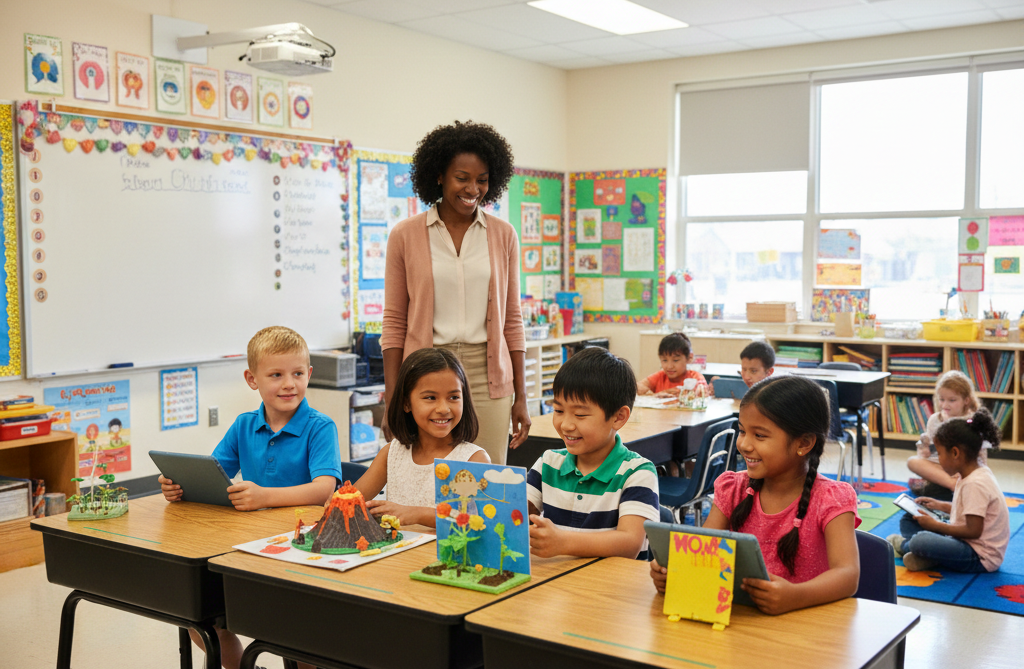
Why Classroom Contests Boost Engagement and Learning
There's something magical that happens when students know their work is going to be showcased and judged. Suddenly, that history project gets more attention. The art becomes more detailed. The presentation gets practiced one more time. Classroom contests create an energy that traditional assignments often can't match.
Beyond the excitement, contests deliver real educational benefits. Students develop resilience when facing healthy competition. They learn to accept feedback gracefully. They discover that effort and improvement matter as much as winning. Most importantly, contests give students a tangible reason to care about their learning—to produce their best work and share it with pride.
What This Guide Covers
Whether you're planning your first classroom contest or looking to refine your competition experience, this guide walks you through every step. You'll discover contest ideas suited to every grade level and subject. You'll learn how to design scoring systems that are fair and transparent. You'll master the art of making competition exciting while keeping it inclusive. And you'll discover how modern tools can make running classroom contests easier than ever—from managing entries to creating that thrilling moment when winners are revealed.
Types of Classroom Contests for Every Subject and Grade Level
Classroom contests work across every subject and age group. The key is choosing competitions that align with your curriculum and your students' interests.
Science and STEM Contests
Science Fair Competitions remain classroom classics for good reason. Students design experiments, collect data, and present findings. The hands-on nature makes learning stick.
STEM Challenges capture the imagination of younger students. Build the tallest tower with limited materials. Create a boat that floats. Design a bridge that supports weight. These time-limited challenges develop problem-solving skills while keeping energy high.
Robotics and Coding Competitions engage tech-minded students. Whether it's programming challenges or robot design contests, these competitions showcase modern skills.
Creative and Artistic Contests
Art Shows and Exhibits celebrate visual creativity. Students submit paintings, drawings, photography, or sculptures. Display them in your classroom or school hallway.
Photography Contests work beautifully with modern phones. Challenge students to capture specific themes: nature, emotion, community, or patterns.
Creative Writing Contests spark imagination. Poetry, short stories, or flash fiction competitions encourage students to express themselves through words.
Poster Design Contests combine art with messaging. Create awareness posters about social causes, environmental issues, or historical topics.
Academic and Performance-Based Contests
Spelling Bees develop language skills while providing healthy competition. Organize class-wide competitions or culminate with a school event.
Debate and Public Speaking Contests build communication confidence. Students defend positions, present arguments, and think on their feet.
Book Report Presentations transform book reports from boring reading into engaging performances. Judge based on clarity, creativity, and enthusiasm.
History and Social Studies Presentations let students become historians. Research projects, timeline presentations, or character portrayals showcase understanding.
Talent Shows celebrate diverse skills. Music, dance, comedy, magic tricks—encourage students to share what makes them special.
Leadership and Community Contests
Student Council Elections are the ultimate classroom voting experience. Candidates campaign, debate, and students experience democratic participation.
Class Officer Elections for president, treasurer, and secretary create engagement with leadership roles.
Classroom Jobs Competitions where students apply for special roles (class greeter, equipment manager, line leader) make responsibilities feel earned.
Special Events and Seasonal Contests
Holiday Contests bring festive energy: holiday decoration design, ugly sweater design, holiday story writing, or gift-wrapping competitions.
Seasonal Theme Contests align with the school year: back-to-school poster design, spring garden design, end-of-year celebration ideas.
Interdisciplinary Competitions combine subjects—history + art for historical figure portraits, literature + performance for character monologues, math + creativity for geometry art.
Age-Appropriate Contest Design
Not all contests work for all ages. Consider your students' developmental stage when designing competitions.
Elementary School (K-5)
Keep it simple. Elementary students need clear rules they can understand and follow. Contests should take limited time to complete and judge.
Emphasize participation. At this age, inclusion matters more than fierce competition. Make sure every student can participate meaningfully.
Use visual judging criteria. Show pictures or examples of what good entries look like. Elementary students benefit from seeing rather than reading standards.
Multiple categories. Instead of one winner, create categories: "Most Creative," "Brightest Colors," "Best Use of Materials." More students go home excited.
Quick feedback. Don't wait weeks to reveal results. Elementary students' excitement fades fast. Reveal winners soon after judging.
Middle School (6-8)
Increase complexity. Middle schoolers can handle nuanced scoring rubrics and more sophisticated competitions.
Build social awareness. This age group is developing socially. Discuss what good sportsmanship looks like. Address friendship concerns ("Will judging my best friend's work hurt our friendship?").
Peer judging opportunities. Involve students in judging other students' work. This develops critical thinking and fairness awareness.
Balance individual and group competitions. Some students thrive with team challenges; others prefer individual showcase.
Real stakes feeling. Middle schoolers want to feel that the competition matters. Use genuine judging criteria and real recognition.
High School (9-12)
Sophisticated judging. High school students can understand complex rubrics, weighted scoring, and nuanced evaluation.
Connection to real world. Connect classroom contests to actual fields: science fairs like real research, debate like legal proceedings, writing contests like actual publications.
Leadership roles. Have high school students help judge younger students' competitions or serve on competition committees.
Portfolio opportunities. Emphasize how contest work can go into portfolios for college or job applications.
Debate controversial elements. Older students can discuss fairness, bias in judging, and what makes competition healthy.
Making Competitions Fair and Educational
The heart of good classroom contests is fairness. When students believe judging is fair and criteria are clear, they embrace competition rather than resent it.
Growth-Focused Scoring Systems
Emphasize effort and improvement, not just outcomes. Include criteria like "Shows growth from previous work," "Demonstrates effort," or "Applies feedback." This tells students that improvement matters.
Use rubrics students can understand. Share judging criteria before the competition starts. Students should know exactly what judges will evaluate.
Create multiple scoring dimensions. Don't judge on a single factor. A science fair judges both methodology and presentation. An art contest judges creativity, technique, and effort. Multiple dimensions mean more students find their strength.
Include a "Personal Best" category. Recognize students who demonstrated significant improvement or gave exceptional effort, regardless of objective quality.
Participation Recognition
"Participation Ribbons" done right. Don't give every student identical recognition (that feels condescending). Instead, recognize categories that celebrate diverse achievements:
- "Most Improved"
- "Best Teamwork"
- "Most Creative Solution"
- "Best Presentation Skills"
- "Judges' Favorite" (voted by judges)
- "Audience Favorite" (voted by peers)
- "Teacher's Choice for Effort"
Tiered recognition. Not everyone gets first place, but most students get recognized for something. This keeps motivation high.
Celebrate the process, not just results. Give recognition for strong methodology, thoughtful approaches, and diligent work, even if the final product isn't perfect.
Scoring System Examples for Different Contest Types
Science Fair Scoring Table
| Criteria | Excellent (4) | Good (3) | Fair (2) | Needs Work (1) |
|---|---|---|---|---|
| Research Question | Clear, specific, testable question | Generally clear question | Vague question | Unclear purpose |
| Methodology | Thorough, well-documented, controls identified | Good methodology, mostly documented | Some methodology issues | Poorly planned |
| Data Collection | Extensive, organized, accurate data | Adequate data collected | Limited data | Insufficient data |
| Analysis | Data clearly supports conclusions | Conclusions supported by data | Some connection to data | Weak connection |
| Presentation | Professional, engaging, well-organized | Clear and organized | Somewhat organized | Poorly presented |
| Effort/Growth | Demonstrates exceptional effort | Shows solid effort | Adequate effort | Minimal effort |
Total possible: 24 points
Art Contest Scoring Table
| Criteria | Excellent (4) | Good (3) | Fair (2) | Needs Work (1) |
|---|---|---|---|---|
| Technical Skill | Strong control of medium/technique | Good technique | Developing technique | Limited skill |
| Creativity | Original, imaginative approach | Creative elements present | Some creativity | Minimal creativity |
| Use of Color/Composition | Excellent visual design | Good color choices | Adequate composition | Weak design |
| Overall Impact | Striking, memorable piece | Engaging work | Decent impression | Weak impact |
| Effort/Craftsmanship | Exceptional detail and care | Good attention to detail | Adequate care | Rushed or careless |
Total possible: 20 points
Presentation/Speaking Contest Scoring Table
| Criteria | Excellent (4) | Good (3) | Fair (2) | Needs Work (1) |
|---|---|---|---|---|
| Content Knowledge | Demonstrates deep understanding | Shows solid knowledge | Basic understanding | Limited knowledge |
| Organization | Logical flow, clear structure | Organized presentation | Generally organized | Disorganized |
| Delivery/Confidence | Engaging, confident delivery | Good eye contact, clear speech | Adequate delivery | Unclear, nervous |
| Visual Aids | Effective, professional visuals | Helpful supporting materials | Basic aids used | Minimal/distracting aids |
| Engagement | Captivates audience | Holds audience interest | Maintains attention | Loses audience |
| Time Management | Perfect use of time | Stays within time limit | Slightly over/under time | Significantly off time |
Total possible: 24 points
Using Technology in Your Classroom
Modern tools transform how you run classroom contests. They make judging faster, results more transparent, and reveals more exciting.
QR Code Voting Systems
What it does: Students scan QR codes to vote for their favorites in simple contests. Perfect for class elections, favorite artwork selections, or talent show judging.
How to set it up:
- Create a simple voting link (many tools generate QR codes automatically)
- Students scan with phones or tablets
- Results update in real-time on a display screen
- No paper ballots needed
Best for: Quick classroom votes, audience favorite selections, student council elections
Phone-Based Scoring for Judges
What it does: Multiple judges score entries on their phones using a shared scoring app. Judges see the same rubric, enter scores, and results compile automatically.
How to use it:
- Set up your scoring rubric in the app before the event
- Share a link with all judges
- Display entries (projected or in-person) while judges score on phones
- Watch results calculate in real-time
Why it matters: Judges don't confer bias with each other. Scoring stays objective. You get instant results instead of hand-calculating points.
Perfect for: Science fairs, art shows, any competition with multiple judges
Parent Judge Events with Live Reveals
What it does: When parents are judges at school events, they score on phones from their seats. Results display on screen as a dramatic reveal.
How it works:
1. Parents attend your open house or family night
2. They view student work (art, science projects, posters)
3. On their phones, they score entries using simple criteria
4. Results instantly calculate
5. You announce winners dramatically on screen
Why educators love it: Parents feel invested in judging. The reveal is exciting and professional. You get authentic feedback from the community.
Managing Student Emotions Around Competition
Not every student loves competitions. Some get anxious. Others struggle with losing. As educators, managing the emotional side is as important as managing the competition itself.
Before the Competition
Set healthy expectations. Talk openly about what competition means. It's not about being the best—it's about trying your best, celebrating peers' work, and learning something in the process.
Normalize all feelings. Let students know that wanting to win is fine. So is feeling nervous. So is being disappointed. All emotions are valid.
Emphasize growth over winning. Repeatedly reinforce that effort, improvement, and participation matter more than placing first.
Discuss fairness. Explain the judging criteria ahead of time. Show examples of strong entries. Answer questions about how judges will evaluate work.
During the Competition
Keep energy positive. Don't let the competitive energy become mean-spirited. Celebrate all participants.
Highlight the work, not the person. Focus comments on the entry itself, not the student. "This art shows amazing color blending" rather than "You're a great artist."
Check in with anxious students. Some students get stressed during competitions. A simple check-in can help them feel supported.
During the Reveal
Build excitement for all. Don't make the reveal feel like a climax only for the winner. Celebrate multiple award categories. Make everyone's moment special.
Announce multiple winners. Don't just announce first place. Give recognition for second place, most improved, best collaboration, most creative, audience favorite, and more.
Let excitement show. When a student wins, celebrate enthusiastically. This models that joy is appropriate and good sportsmanship includes celebrating others' wins.
After the Competition
Debrief with grace. Talk about what happened. Celebrate strong performances. Discuss what students learned.
Acknowledge disappointment. If a student feels sad about not placing, validate that feeling. "It's okay to feel disappointed. You worked really hard."
Look forward. Discuss the next contest, next opportunity. Keep the focus on growth rather than dwelling on outcomes.
Celebrate publicly. Display winning entries. Share results with families. Let students feel their work mattered.
Involving Parents in School Contests
Parents add excitement and authenticity to classroom contests. When families are invested, competitions feel more real and meaningful.
Open House Contests
Display student work. Before your open house, have students complete contest entries. Display them beautifully around your classroom.
Parent judging. Give parents scorecards and judging criteria. Let them score entries during the open house. This makes families feel part of school.
Live reveal. Later that day or the next day, announce results. Show parents the scores. Celebrate with students.
Family Night Competitions
Host a contest event. Invite families to an evening event featuring student work. Talent show, art gallery, science fair, or project showcase.
Judges can be parents, teachers, or community members. Mix up your judges to show students that excellence looks different to different people.
Serve snacks and create festive atmosphere. Make it an event worth attending.
Student Council Elections with Family Connection
Campaign posters at home. Have candidates create campaign posters with family help (not family control). Students see parental support for their goals.
Family voting. Some schools let families vote alongside students for class president. This involves the community and shows students that their voice matters.
Celebration event. Host a small celebration when new officers are announced.
The Reveal: Making It Exciting and Inclusive
How you reveal winners shapes how students experience the competition. A good reveal is exciting, fair, and makes everyone feel valued.
Building Suspense
Count down categories. Instead of revealing all winners at once, build suspense. Announce "Most Improved" first, then "Best Presentation," then "First Place."
Read names dramatically. Take a pause before announcing. Build anticipation.
Celebrate each category equally. Don't save all enthusiasm for first place. Make every award announcement exciting.
Display results visually. Project scores or results on screen. Students see the fairness in numbers. There's less arguing about who won.
Multiple Award Categories (The Secret to Inclusivity)
Here's the reality: In a class of 25, having only three places (1st, 2nd, 3rd) leaves 22 students without recognition. Instead, create categories that celebrate diverse achievements:
Academic/Quality-Based:
- First Place
- Second Place
- Third Place
- Judges' Favorite
- Most Creative
- Best Execution/Technique
Growth-Based:
- Most Improved
- Most Effort
- Best Application of Feedback
Participation/Community-Based:
- Audience Favorite
- Best Teamwork
- Most Inspiring
- People's Choice
Age/Experience-Based:
- Freshman Category (for high school competitions)
- New to Competition (students who've never competed)
With creative categories, even in a class of 25, you might recognize 15-18 students for something. Every student goes home with something to celebrate.
Making Non-Winners Feel Valued
Acknowledge everyone who participated. A simple "Let's give a round of applause to everyone who entered" means students feel their participation mattered.
Emphasize that every entry took skill. "We got 30 amazing science projects. Judges had to make hard choices between excellent work."
Point out specific strengths in non-winning work. "Alex's project didn't place in top three, but his data analysis was incredibly thorough."
Recognize peer appreciation. Sometimes the best recognition is peer feedback. Have students give classmates genuine compliments about their work.
Building a Culture of Healthy Competition
The goal isn't just to run contests—it's to create a classroom culture where students embrace healthy competition, celebrate peers' successes, and view challenge as opportunity rather than threat.
Teaching Good Sportsmanship
Model it. When you're disappointed, show resilience. When someone else succeeds, celebrate genuinely.
Teach specific skills:
- "When someone wins, I say, 'Great job!' and mean it"
- "When I don't place, I look for what I learned"
- "I celebrate my friends' wins because I care about them"
- "I accept feedback without making excuses"
Practice celebrating peers. After the reveal, have students write or say something positive about another student's entry.
Creating Safe Failure
Reframe losses. "Not winning this time means you know what to work on next time."
Celebrate the process. Emphasize that the work itself—the trying, the effort, the learning—is the real win.
Normalize that we all lose sometimes. Share stories of adults who didn't win and learned from it. Normalize that every person with accomplishments also has losses.
Preventing Toxic Competition
Watch for comparison spirals. If students start being mean to each other or excessively focused on winning, pause and reset expectations.
Don't pit students against each other. Avoid saying "Alex's project is better than Jamie's." Instead, celebrate what each did well.
Set boundaries on competitive talk. If students start trash-talking or being unkind, set clear expectations that this isn't how we do competition here.
Remember the goal. Competition is a tool for engagement and learning, not an end in itself. If it stops serving those purposes, dial it back.
Common Mistakes to Avoid
Learn from teachers who've navigated classroom contests before. Here are mistakes to sidestep:
Mistake 1: Making the Competition Too Intense
Some teachers let competitive energy take over. Students get stressed. Anxiety spikes. Learning takes a back seat to winning.
Fix it: Regularly remind students that effort matters more than placement. Include multiple award categories. Use positive reinforcement instead of only celebrating winners.
Mistake 2: Only Recognizing Winners
When only first-place students get recognition, everyone else feels like they lost. Motivation drops.
Fix it: Create at least 8-10 award categories so most students get recognized for something.
Mistake 3: Unclear or Biased Judging Criteria
If students don't know how they'll be judged, or if judging seems biased, they'll resent the competition.
Fix it: Share detailed rubrics before the competition starts. Use consistent scoring across all entries. Be transparent about results (show the scores, not just rankings).
Mistake 4: Leaving Students Out
Some students refuse to participate if they think they can't win. This defeats the whole purpose.
Fix it: Make sure every student can participate at their level. Celebrate participation. Have open entry categories where anyone can submit.
Mistake 5: Poor Timing or Pacing
Competitions that drag on lose energy. Results announced weeks later kill excitement.
Fix it: Keep timelines short and clear. Announce results within a few days while excitement is still high.
Mistake 6: Not Managing Emotions Proactively
Teachers who don't prepare for emotional reactions are caught off-guard when students cry or get angry about results.
Fix it: Talk about feelings before competitions start. Be ready with supportive language. Debrief afterward.
Mistake 7: Making It Too Complicated
Overly complex competitions with many rounds and rules confuse students and slow things down.
Fix it: Keep rules simple. One or two scoring criteria for elementary students. More detailed rubrics for older students.
Mistake 8: Forgetting the Learning
Sometimes the competition becomes so fun that the underlying learning gets lost.
Fix it: Always connect the competition back to learning goals. "This science fair taught us how real scientists work." "This writing contest made us better storytellers."
Student Council Elections and Class Votes
Classroom voting is a contest with special significance. It's not just about winning—it's about practicing democracy.
Running Fair Student Council Elections
Campaign period. Give candidates time to campaign and explain their ideas. They might create posters, give speeches, or distribute flyers.
Clear criteria. What qualities are students voting for? Leadership? Listening skills? Fun ideas? Share these so voters know what they're evaluating.
Secret ballot. Use anonymous voting so students vote their true preference, not what friends want.
Fair access. Make sure all students feel welcome to run, regardless of popularity or social status.
Celebration of service. Emphasize that winning isn't about popularity—it's about taking on responsibility to serve classmates.
Using Digital Voting Tools
QR code voting. Students scan a code to vote from their phones. Results are instant and anonymous.
Paper ballot scanning. If you prefer paper, you can collect ballots and tally them (but digital is faster).
Results projection. Display results on screen as votes come in (or announce results dramatically after all voting is done).
Teaching moment. Walk through the voting process. Show students how results are calculated. This reinforces that elections are fair and transparent.
Scoring Ideas for Different Contest Types
The beauty of classroom contests is their adaptability. You can use the same approach (scoring rubric + multiple judges + dramatic reveal) across different contest types:
Writing Contests: Score on clarity, creativity, grammar, and engagement
Debate Competitions: Score on research, argument quality, delivery, and rebuttal effectiveness
Athletic Competitions: Score on technique, strategy, teamwork, and improvement
Presentation Contests: Score on content, delivery, visuals, and time management
Problem-Solving Contests: Score on solution quality, explanation clarity, and creativity
Group Competitions: Include scores for collaboration and individual contribution
For each, create a rubric, share it with students, have judges score using the rubric, and recognize multiple winners in different categories.
Making It Sustainable: Running Contests Regularly
The best classroom contest culture involves regular competitions, not just one big event per year.
Monthly contests: Small, low-stress competitions (best poem, favorite historical figure poster, most helpful act)
Unit competitions: As you finish units, competitions celebrate learning (our best science explanations, coolest math problem solutions)
Seasonal events: Holiday contests, spring creativity contests, end-of-year celebrations
Quarterly showcase: One larger event featuring multiple competitions
Regular recognition: Weekly or monthly shout-outs for effort, improvement, and achievement
Regular contests normalize healthy competition and give every student multiple opportunities to shine.
Educator Pricing and Support
Running amazing classroom contests shouldn't require expensive tools or hours of planning. Reveal The Winner is built specifically for educators who want to make competitions exciting and fair—without the stress.
Special Educator Pricing: We offer significant discounts for teachers and schools. Whether you're running a small class election or school-wide competitions, we have pricing that works for your budget.
Free Trial: Try Reveal The Winner free for your next classroom contest. See how students respond to transparent judging, dramatic reveals, and phone-based scoring.
Support When You Need It: Our team understands teachers are busy. We offer quick setup, clear instructions, and responsive support.
Whether you're discovering classroom contests for the first time or looking to level up your competition approach, Reveal The Winner makes it easy. Your students will feel the difference.
Common Questions About Classroom Contests
Q: Won't competitions hurt shy or anxious students?
A: Not if you design contests to include everyone. Optional entry, multiple award categories, and focus on growth rather than winning helps shy students participate without pressure. Some of the best entries come from quiet students who pour effort into their work.
Q: What if students argue about judging?
A: This is exactly why transparent rubrics and multiple judges matter. When students see the scoring criteria and the numbers, disagreements drop dramatically. You can even teach students to respectfully accept decisions while learning how real competitions work.
Q: Can I run contests in small classes?
A: Absolutely. In a class of 10-12, you can have 8-10 award categories. Everyone gets recognized. The dynamics are actually better because there's less anonymity and more peer support.
Q: How much time does a competition take?
A: A simple classroom contest might take one afternoon (entry time + judging + reveal). A larger event like science fair might take weeks of preparation. You control the scope.
Q: Should I include grades in the competition?
A: You can, but it's optional. Many teachers keep competitions separate from grades to reduce stress. Others include competition participation as an extra credit or engagement opportunity.
Related Articles
- Fair Judging: How to Score Entries Objectively and Transparently – Learn the rubric-building techniques that make judging fair and defendable
- Art and Photography Contests: A Complete Guide – Specific strategies for visual competitions, from setup to display
- Holiday Contest Ideas: Fun, Inclusive Competitions for Every Holiday – Seasonal contest themes that work year-round
- Student Engagement Through Competition – Research and strategies for using contests as learning tools
- Running Virtual Contests: Distance Learning Edition – Keep competitions alive when classes aren't in-person
Keywords
Classroom contest, school competition, student council election, science fair judging, classroom voting, teacher contest ideas, school contest scoring, student engagement, educational competitions, fair judging, inclusive competitions, classroom culture, teacher tools, student motivation, contest rubrics, competition scoring, school events, classroom activity ideas, student recognition, healthy competition
Last updated: February 2026
Questions about running classroom contests? Contact our educator support team or visit our resource center for teachers.