How to Run a Backyard BBQ Competition: The Complete Guide
Table of Contents
- Why Host a BBQ Competition?
- Planning Your BBQ Competition
- Establishing Rules and Format
- Scoring System
- Setting Up for Success
- Equipment and Supply Checklist
- Day-of Timeline
- Running the Event: Key Management Tips
- The Reveal Ceremony
- Prizes and Awards Strategy
- Common Mistakes and How to Avoid Them
- Building Annual Tradition
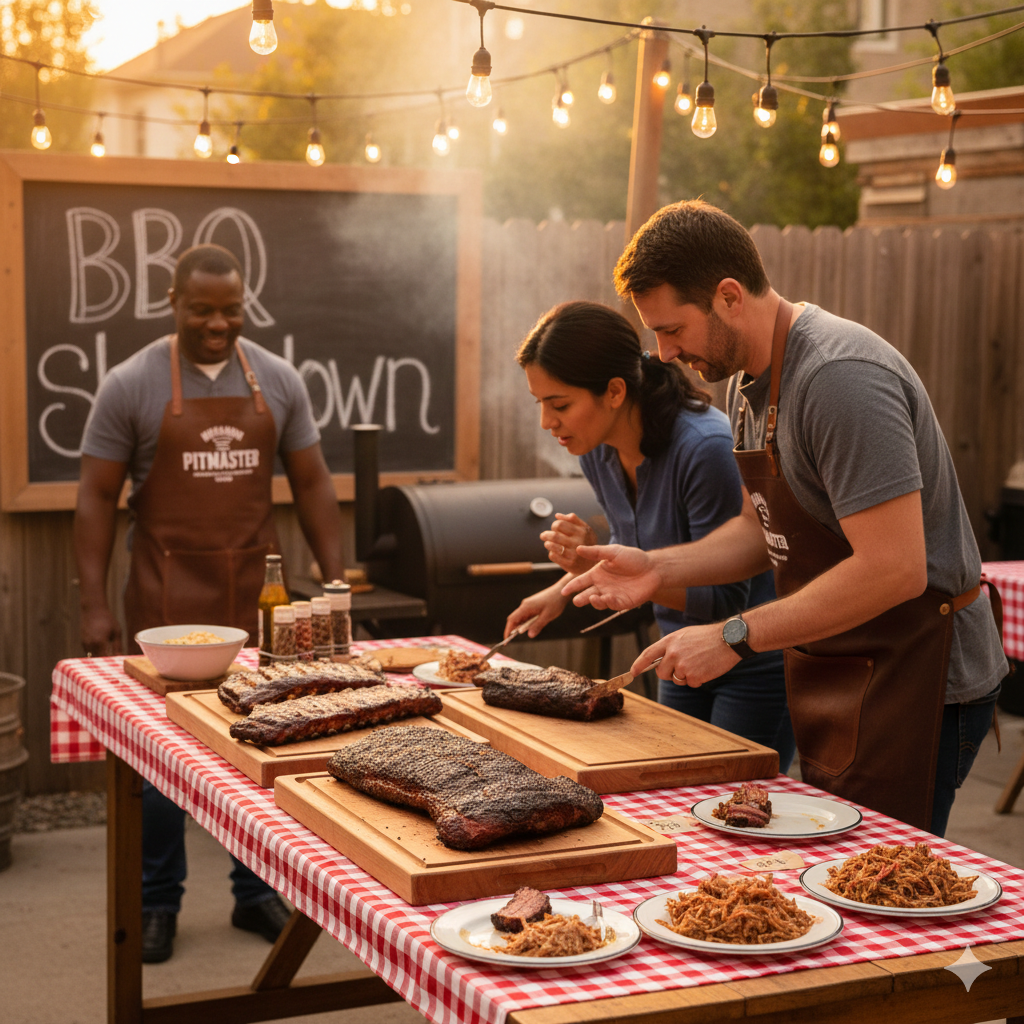
There's something magical about the smell of smoke drifting across a yard filled with competitive spirits and hungry friends. A backyard BBQ competition isn't just about the food—it's about the stories, the friendly rivalries, and that moment when you reveal the champion to a crowd holding its breath. Whether you're hosting fellow pitmasters or introducing your community to competitive barbecue, a well-organized competition creates memories that last far longer than the meal.
In this guide, we'll walk you through every step of planning and executing a backyard BBQ competition that keeps judges engaged, food safe, and winners celebrated. From choosing your categories to managing the reveal ceremony, you'll have everything you need to run a competition that feels both professional and authentically fun.
Why Host a BBQ Competition?
Bringing Community Together. BBQ competitions create a unique opportunity for neighbors, friends, and colleagues to gather around a shared passion. Unlike passive potlucks, competitions give everyone a stake in the outcome—whether as a competitor hoping to win or a judge determining the victor.
Celebrating the Craft. Barbecue is a craft that demands patience, skill, and attention to detail. By hosting a competition, you're validating that effort and giving talented cooks a stage to showcase their work. Even casual backyard BBQ enthusiasts appreciate the chance to be recognized for their talents.
Building Tradition. The most memorable backyard events are the ones people talk about all year. An annual or semi-annual BBQ competition becomes the event people circle on their calendars, bring friends to, and spend months planning their entries for. You're not just hosting an event; you're building a tradition.
Planning Your BBQ Competition
Choosing Your Date and Season. Timing matters for a BBQ competition. Summer months (June through August) offer warm weather and longer days, giving cooks plenty of daylight for preparation. However, spring and fall competitions can be equally successful and often feature more comfortable temperatures for both cooks and judges. Avoid scheduling around major holidays or weekends when potential participants might have conflicting plans. Give yourself at least 4-6 weeks of lead time to invite participants and finalize details.
Building Your Guest List. Decide whether this is invitation-only or open to the community. Invitation-only competitions maintain a smaller, more intimate feel, while open competitions can attract serious competitors and larger audiences. Aim for 6-12 competitor entries to keep judging manageable—too many entries mean cold food and judge fatigue. Recruit at least 8-10 judges from your friends, family, and community (more on judging best practices below).
Deciding on Categories. Your categories define the competition's scope and difficulty. Common BBQ categories include:
- Ribs (baby back or spare ribs, scored on tenderness and bark)
- Pulled Pork (shoulder or butt, judged on texture and smoke flavor)
- Brisket (whole packer or flat, requiring advanced skill)
- Chicken (whole or pieces, faster-cooking category)
- Sauce (homemade competition or blind tasting)
- Sides (mac and cheese, beans, cornbread, etc.)
For a first-time backyard competition, start with 2-3 categories maximum. This keeps judging from becoming overwhelming and allows cooks to focus their efforts. Multi-category competitions are best saved for experienced groups.
Establishing Rules and Format
Single Meat vs. Multi-Category Format. A single-category competition (e.g., ribs only) is ideal for your first event. It's easier to organize, judge, and source materials. Once you've run one successfully, you can expand to multi-category competitions where each competitor submits entries in multiple categories—though this dramatically increases complexity.
Team vs. Individual Competition. Individual competitions invite solo pitmasters to compete. Team competitions encourage small groups to collaborate, making the event more social. Team formats work great for workplace BBQ competitions or community events. Clarify your format when you invite participants so everyone knows what they're signing up for.
Entry Fee and Prizes. Consider charging a small entry fee ($25-50 per entry) to cover supplies, judges' food, and prizes. This also signals to participants that you're serious about the competition. Prize structures might include:
- First place: $100-200 cash or trophy + bragging rights
- Second place: $50-100 + trophy
- Third place: $25 + trophy
- Fan favorite (if applicable): Small prize voted by attendees
Scoring System
The heart of any fair competition is transparent judging criteria. This ensures every entry is evaluated consistently and competitors understand exactly what you're looking for.
| Category | Weight | What Judges Consider |
|---|---|---|
| Taste | 40% | Flavor balance, smoke depth, seasoning, authenticity |
| Tenderness | 25% | Meat pulls apart easily, not tough or dry |
| Appearance | 20% | Color consistency, bark quality, professional presentation |
| Smoke Ring/Technique | 15% | Evidence of proper smoking, pink smoke ring, quality cooking method |
Each category is scored on a scale of 1-10 by each judge. The scores are multiplied by the weight percentage to create a final score. For example:
- Taste (8/10) × 0.40 = 3.2 points
- Tenderness (7/10) × 0.25 = 1.75 points
- Appearance (9/10) × 0.20 = 1.8 points
- Smoke Ring (8/10) × 0.15 = 1.2 points
- Total: 8.0 points per judge
Collect scores from all judges and average them to determine the winner. This transparent system removes bias and gives every competitor confidence in the results.
Setting Up for Success
Tasting Stations. Create a dedicated judging area separate from where spectators hang out. This prevents contamination, maintains focus, and protects judge confidentiality. Set up a table with water, neutral palate cleansers (crackers, apple slices, bread), and small sample plates. Number each entry (1, 2, 3, etc.) instead of using competitor names—judges should score blind to the cook's identity.
Blind Judging Protocol. Remove all identifying markers from entries. Place samples in identical containers or plates labeled only with numbers. This is critical for fairness and prevents judges from being influenced by knowing who prepared each entry. Have a separate person manage the entry-to-judge flow so judges never know which cook submitted which entry.
Food Safety Essentials. Outdoor cooking requires extra attention to food safety. Ensure all raw meat is kept cold until cooking begins. Cooked food should be kept hot (above 140°F) or moved to coolers immediately after preparation. Have hand-washing stations available for cooks. Check that all grills and smokers are in good working order before the competition begins. If you're concerned about food safety, ask cooks to provide food handling certification or a basic food safety checklist they've completed.
Equipment and Supply Checklist
Before competition day, gather these essentials:
- Scoring sheets (one per judge per entry)
- Numbered entry containers or plates (ceramic works better than disposables)
- Palate cleansers (water, unsalted crackers, apple slices, bread)
- Small tasting utensils (forks, toothpicks, small spoons)
- Thermometers (to verify food safety temperatures)
- Timer (for tracking cook times if needed)
- Coolers (to keep cooked entries warm between judging)
- Serving utensils (tongs, forks for serving)
- Napkins and small plates (for judges)
- Score collection system (clipboard, forms, or digital scoring app)
- Signage (entry numbers, category labels, timing schedule)
- Prizes and awards (trophies, certificates, cash envelopes)
Day-of Timeline
Proper timing keeps your competition running smoothly and ensures food is at its best when judges taste it. Here's a sample timeline for a single-category competition with 8 entries:
| Time | Activity |
|---|---|
| 10:00 AM | Participants arrive; verify smoker/grill setup |
| 10:15 AM | Final safety check; all participants begin cooking |
| 12:00 PM | Judges arrive; review scoring criteria and blind judging protocol |
| 12:30 PM | Judging briefing; explain palate cleansing and scoring process |
| 1:00 PM | First entries submitted and plated for judges |
| 1:15 PM | Judges taste first set of entries; score blindly |
| 1:45 PM | Entries 3-4 submitted for judging |
| 2:15 PM | Entries 5-6 submitted for judging |
| 2:45 PM | Entries 7-8 submitted for judging |
| 3:15 PM | All judging complete; scores collected and tallied |
| 3:30 PM | Results verified (optional: recount if close calls exist) |
| 4:00 PM | The Reveal Ceremony (see below) |
| 4:30 PM | Celebration, final comments from judges, informal eating |
Running the Event: Key Management Tips
Managing Cook Times. BBQ cooks need predictable timing windows. Start your official cook time at a specified hour and communicate when entries must be submitted for judging. Allow flexibility—give cooks a 30-minute submission window (e.g., "submit between 1:00-1:30 PM") so they can pull their entries at peak doneness. Keep a timer visible so participants know when submission periods open and close.
Palate Cleansers Are Non-Negotiable. Judges will taste 8-10 samples in succession. Without proper palate cleansing between entries, flavors blend together and later entries are judged unfairly. Provide water and neutral foods (plain crackers, unsalted bread, apple slices). Instruct judges to cleanse their palates between each sample. Some competitions include a "neutral entry" (plain meat with no seasoning) as a palate reset between categories.
Keeping Entries Warm. Hot food tastes better and more accurately represents the cook's work. Once entries are submitted, place them in insulated coolers or warming trays set to low heat. Check temperatures regularly to ensure food stays above 140°F. Cold, congealed BBQ will score poorly even if it was excellent when cooked.
Managing Spectators. Designate a clear spectator area separate from the judging area. Let attendees enjoy the atmosphere, smell the smoke, and hang out with competitors—this is part of the fun. But keep judges focused and isolated during the actual tasting to maintain blind judging integrity. Announce when the reveal ceremony will happen so spectators know when to gather.
The Reveal Ceremony
This is what makes competitions memorable. Build anticipation by announcing winners dramatically.
Announcing Results. Gather everyone around at the designated time. Have someone (yourself, an emcee, or a respected community member) read the results from third place up to the grand champion. Add narrative—briefly mention what stood out about each winning entry. "Third place goes to Entry #6, which our judges loved for its incredibly tender texture and balanced smoke flavor!" This acknowledges everyone's effort and explains your judging criteria.
The Winner Reveal. Save the grand champion for last. Build suspense: "And now, the moment we've all been waiting for... the champion of our backyard BBQ competition..." Pause. Open the envelope. Announce the winner. Invite them to the front for a photo, brief remarks, or acceptance moment. This theatrical touch is what people remember and share with others.
Honoring the Judges. Give judges credit publicly. Their work made the competition fair and credible. A brief "thank you to our judges who sampled and scored every entry" goes a long way toward building respect for the judging process.
Prizes and Awards Strategy
Keep It Fair Across Categories. If running a multi-category competition, ensure each category has equivalent prizes. A first-place brisket winner shouldn't receive significantly more than a first-place chicken winner, or you create resentment and discourage participation in certain categories.
Recognition Matters As Much As Cash. Don't underestimate the value of a trophy, certificate, or public announcement. Many backyard competitors care more about bragging rights and a permanent reminder of their win than a cash prize. Offer both when possible.
Consider Special Categories. Beyond first, second, and third place, you might award:
- People's Choice: Fan-voted award for favorite entry (voted by non-judges)
- Most Creative: Best original rub or technique
- Best Presentation: Most visually appealing entry
- Spirit Award: Best attitude and energy (for team competitions)
These additional categories make more people feel recognized and prevent the competition from feeling entirely outcome-focused.
Common Mistakes and How to Avoid Them
Too Many Categories in Year One. The temptation is strong to make the first competition ambitious—ribs, brisket, pulled pork, sauce, and sides. But this overwhelms judges, extends the event to exhausting lengths, and makes scoring feel like work. Solution: Start with one category. You can always expand next year once you've proven the format works.
Skipping Blind Judging. Some organizers think blind judging is unnecessary or overly formal for a backyard event. This is a mistake. Judges have unconscious biases, and knowing who cooked what influences their scores. Solution: Strictly enforce blind judging. Use numbers, not names. Keep competitor identities confidential until results are announced.
Ignoring Food Safety. Outdoor cooking in warm weather is fun but risky if temperatures aren't monitored. Undercooked chicken or pork kept at unsafe temperatures can make people sick. Solution: Use meat thermometers to verify safe internal temperatures. Keep raw and cooked foods separated. Require hand-washing stations. When in doubt, ask competitors to bring food handling certification.
Not Enough Palate Cleansers. Judges taste one excellent BBQ entry and immediately taste the next one with residual flavor on their palates. Every entry after the first suffers in comparison. Solution: Provide generous amounts of water, crackers, and bread. Build 5-minute palate cleansing breaks between entry sets. Consider using a "neutral control" sample.
Unclear Judging Criteria. Judges may score entries based on personal preference rather than your established criteria if scoring guidelines aren't crystal clear. Solution: Distribute scoring sheets with specific criteria before judging begins. Do a brief orientation explaining what "tenderness" and "appearance" mean to your competition. Let judges ask clarifying questions.
Announcing Results Before Verifying Tallies. A miscalculated score announced publicly is incredibly awkward to correct. Solution: Collect all judge scoresheets, tally results carefully, and double-check before announcing anything. Have a backup person verify your math.
Making the Reveal Anticlimactic. Reading results quietly or just emailing them to participants misses the whole point. Solution: Create ceremony. Gather everyone. Build suspense. Make it theatrical. This moment is free entertainment and the memory people carry away.
Building Annual Tradition
Once you've run a successful BBQ competition, consider making it annual. Traditions grow stronger each year as people circle the date on their calendars and start planning months in advance. Mark your next competition on your calendar, send a save-the-date email, and start gathering feedback from this year's competitors about what worked and what you'd change.
An annual backyard BBQ competition becomes more than a one-time event—it becomes the neighborhood or friend group's thing. It's the event people brag about and invite others to. It's the competition someone finally won after three years of trying. These are the moments that build lasting community.